
What is matrix analysis?
You're facing a stack of data processing agreements and need to extract and evaluate criteria such as controllers, processors, instruction rights, and subcontractors. Normally, you'd review each contract individually, note key points, and compile everything into an Excel spreadsheet at the end. This takes hours, and you can still miss details.
Matrix analysis solves exactly this problem. It automatically transforms your document collections into a structured table presents the information you need at a glance.
How matrix analysis works
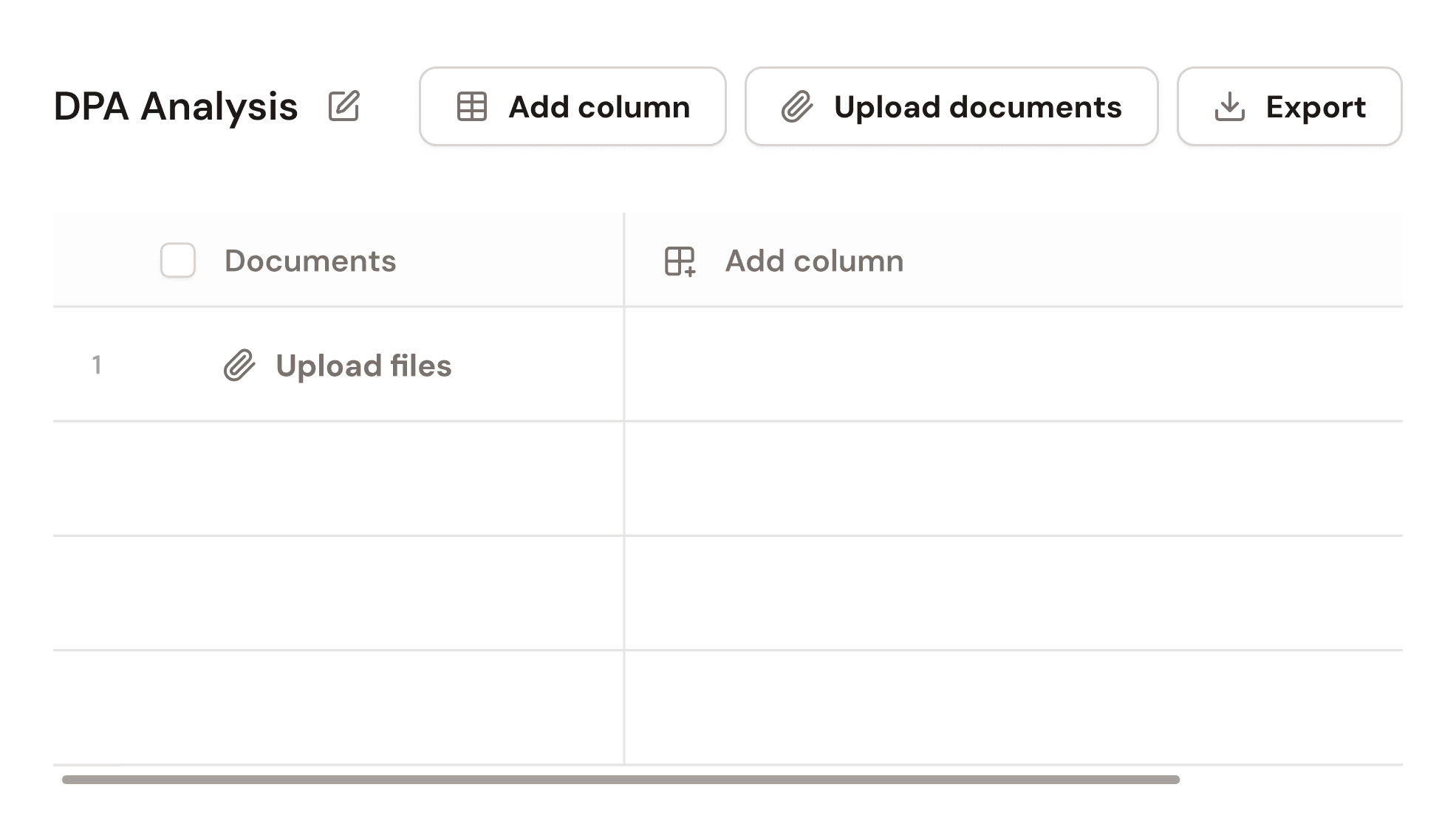
A matrix analysis is a table in which each row represents one of your uploaded documents. The columns contain evaluation criteria – the specific information you want to extract from each document. The AI automatically enters the results for each criterion in the cells.
When matrix analysis simplifies your daily work
To give you a clearer sense of when matrix analysis is particularly useful, here are some concrete examples:
Managing due diligence reviews
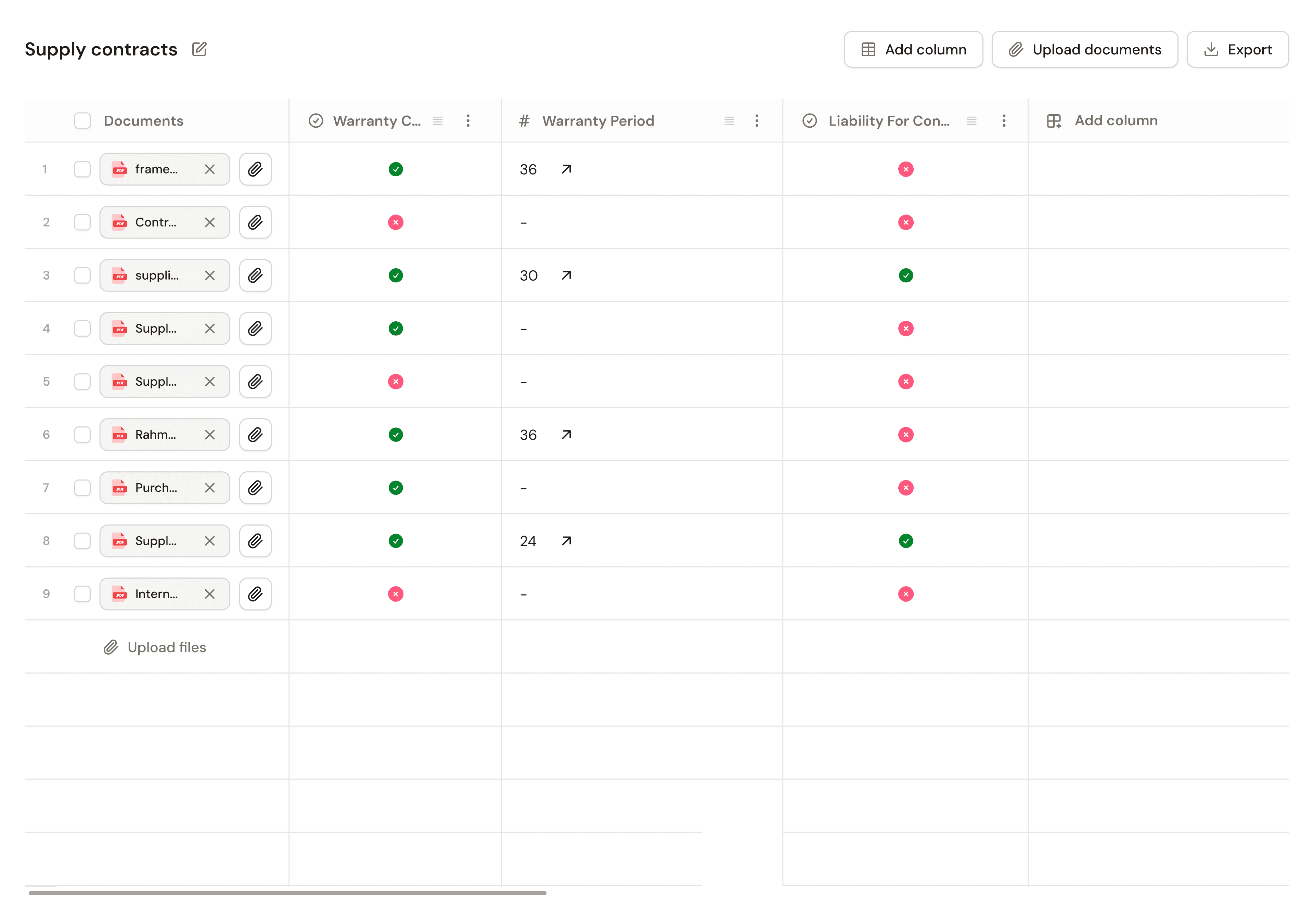
During company acquisitions, hundreds of contracts often need to be reviewed in a very short time. Each contract contains important information on warranty periods, liability exclusions, or termination conditions. Manual review would take days – with matrix analysis, you have a complete overview in minutes.
Let's say you're analyzing 50 supply contracts. The matrix immediately highlights which contracts lack warranty clauses, where liability is unreasonably limited, and which termination periods are critical. High-risk contracts jump out at you immediately.
Systematizing contract management
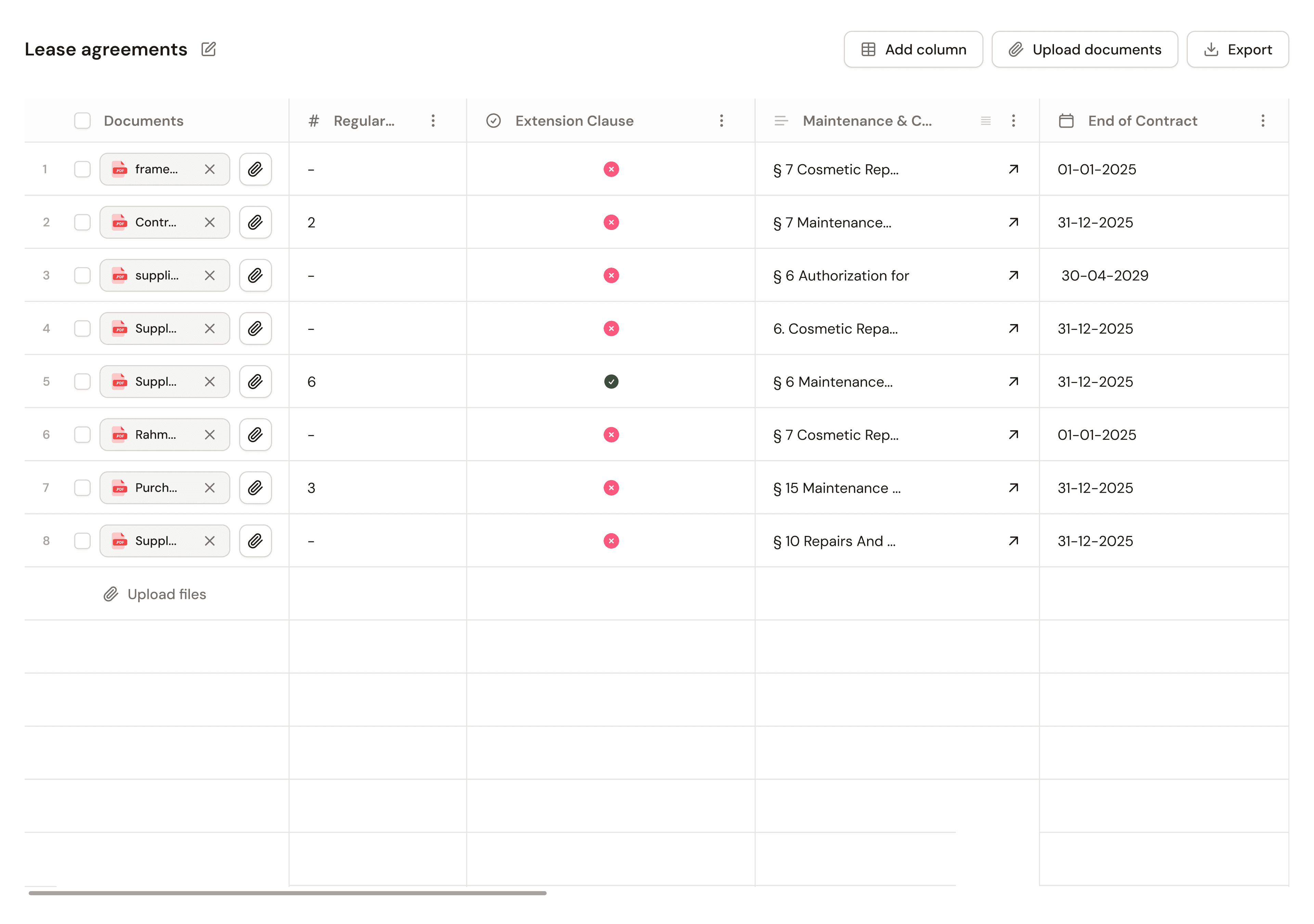
When you manage hundreds of contracts as a legal department or law firm, you quickly lose track. Which leases expire when? Where are the automatic renewal clauses? What notice periods apply?
With matrix analysis, you upload all contracts to get an overview of which contracts expire in the next six months, which are at risk of automatic renewal, and which urgently need renegotiation. You can act proactively rather than just react.
Structuring compliance reviews
During regular compliance reviews, you need to evaluate various documents using uniform criteria. Privacy policies, terms and conditions, or work instructions – each document must be checked for specific aspects. Matrix analysis helps you avoid missing anything and ensures all reviews follow the same standard.
The benefits for your daily work
The main benefit is significant time efficiency. Instead of manually reviewing each document, you receive structured information from numerous documents in seconds.
At the same time, matrix analysis ensures consistency. While you might tire after the tenth contract during manual review and overlook details, the AI maintains the same precision across every document.
The limitations of matrix analysis
Matrix analysis is excellent for structured information extraction and evaluation based on clear criteria. It's less suitable when you need highly individual, context-dependent interpretations or when each document requires a completely different approach.

Dennis Engelhard